Введение
Разрыв — один из наиболее распространенных видов повреждений текстильных изделий в процессе эксплуатации. Будь то зацепление манжеты куртки за ветку дерева, удар острым предметом по колену рабочих брюк или воздействие сильного ветра на ткань палатки — все эти ситуации могут привести к быстрому разрыву ткани вдоль направления нитей, начиная с локального надреза.
Прочность на разрыв, как ключевой показатель для оценки долговечности и безопасности ткани, напрямую влияет на срок службы изделия и безопасность потребителя. В данной статье представлены систематические технические рекомендации для лабораторий по испытанию текстильных изделий на основе анализа четырех ключевых аспектов: механизмов разрушения, методов испытаний, влияющих факторов и применения приборов.
I. Физические механизмы разрыва
1.1 Природа разрыва: последовательный обрыв нити
В отличие от разрыва при растяжении, когда нагрузка одновременно приходится на всю группу нитей, разрыв характеризуется значительной концентрацией напряжений. При наличии надреза на краю ткани (например, зацепа или пореза) внешняя сила заставляет нити на вершине надреза сначала испытывать нагрузку, значительно превышающую среднюю. Как только первая нить обрывается, напряжение немедленно передается на следующую нить, создавая цепную реакцию «домино», которая в конечном итоге приводит к быстрому распространению трещин.
В процессе разрыва внутри ткани образуется характерный треугольник напряжений (треугольник разрыва):
- Вершина: Кончик выемки, где находится обрывающаяся в данный момент нить.
- Основание: Система нитей, перпендикулярная направлению разрыва, которая воспринимает основную нагрузку.
- Гипотенуза: Соседние нити, которые постепенно втягиваются в напряженное состояние.
1.2 Факторы, определяющие прочность на разрыв
На основе механического анализа структуры ткани установлено, что прочность на разрыв в первую очередь зависит от следующих факторов:
1. Прочность пряжи на разрыв: Прочность на разрыв прямо пропорциональна прочности пряжи на разрыв.
2. Удлинение нити: Чем больше удлинение при разрыве, тем больше площадь треугольника напряжений и тем больше количество нитей, находящихся под напряжением, что приводит к более высокой прочности на разрыв.
3. Коэффициент трения нитей: Сопротивление трению между нитями влияет на эффективность передачи напряжений и форму треугольника напряжений.
4. Плотность ткани и структура плетения: Чрезмерно высокая плотность может препятствовать скольжению нитей, тем самым снижая прочность на разрыв.
II. Методология испытаний и интерпретация стандартов
К наиболее распространенным методам определения прочности ткани на разрыв относятся маятниковый метод (метод Эльмендорфа), метод языка (брючный метод) и трапециевидный метод.
2.1 Маятниковый метод (метод Эльмендорфа) — Динамическое ударное испытание
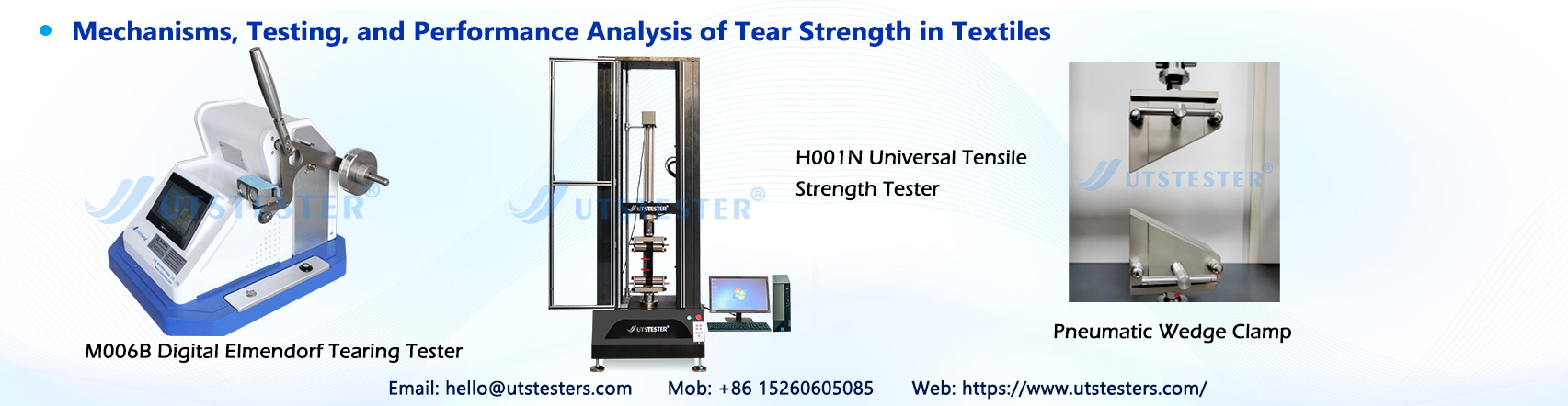
Стандарты: GB/T 3917.1-2009, ISO 13937-1:2000, ASTM D1424-25
Принцип испытания: На основе закона сохранения энергии маятник поднимается на заданную высоту для накопления потенциальной энергии. После отпускания эта потенциальная энергия преобразуется в кинетическую энергию, вызывая разрыв образца. Измеряя оставшийся угол качания маятника после разрыва образца, рассчитывается затраченная энергия, что позволяет определить прочность на разрыв.
Технические характеристики образца: прямоугольник размером 63 мм × 100 мм с прорезью шириной 20 мм в центре.
Область применения:
- ✓ Тканые материалы, нетканые материалы, ламинированные ткани, ворсовые ткани, ткани для подушек безопасности
- ✓ Трикотажные полотна, изготовленные методом основовязания, протестированы в направлении основы.
- ✗ Трикотажные ткани, эластичные ткани, ткани с высокой анизотропией
Технические характеристики:
- Высокая скорость тестирования (<1 секунды на тест), имитирующая сценарии внезапного разрыва.
— Кривая зависимости силы от времени имеет типичный пилообразный вид, отражающий процесс разрыва одной нити.
- Требуется многодиапазонный маятник (обычно от 200 до 6400 гс); испытательная сила должна находиться в пределах 20–80% от диапазона.
2.2 Метод испытаний брюк (метод одинарного шва) — Испытание на растяжение при постоянной скорости
Стандарты: GB/T 3917.2-2009, ISO 13937-2:2000
Принцип испытания: Прямоугольный образец вырезается по центру короткой стороны, образуя форму «брюки». Две штанины зажимаются в верхнем и нижнем зажимах машины для испытаний на растяжение соответственно и растягиваются с постоянной скоростью (100 мм/мин) при регистрации изменений силы в процессе разрыва.
Требования к сбору данных: Разделите кривую зависимости силы от смещения на четыре равных сегмента. Отбросьте первую четверть и вычислите среднее значение всех пиковых значений из оставшихся трех сегментов в качестве окончательного результата.
Отличия от маятникового метода: Механизмы обоих методов схожи, но метод с использованием штанин предполагает медленное, равномерное разрывание, тогда как маятниковый метод предполагает быстрое ударное разрывание. Для одной и той же ткани результаты, полученные с помощью маятникового метода, обычно немного ниже, чем результаты, полученные с помощью метода с использованием штанин.
2.3 Метод языка (метод двойной щели) — тест на двунаправленный разрыв
Стандарты: GB/T 3917.4-2009, ISO 13937-4:2000
Принцип испытания: В прямоугольном образце вырезаются две параллельные щели, образующие языкообразный образец. Эти «язычки» зажимаются отдельно, чтобы линии разреза оставались параллельными, и вдоль линий разреза прикладывается растягивающая сила для имитации процесса двунаправленного разрыва.
Область применения: Широко используется для различных типов тканей, включая натуральные волокна, химические волокна и смесовые ткани; особенно подходит для тканей для одежды и домашнего текстиля.
2.4 Трапециевидный метод — Синергетический тест на прочность многониточного соединения
Стандарты: GB/T 3917.3-2025 (новое издание), ASTM D5587
Принцип испытания: Образец вырезается в форме трапеции с центральным разрезом на короткой стороне. Две непараллельные стороны трапеции зажимаются, располагая разрез между двумя зажимами. Во время испытания на растяжение разрыв распространяется по ширине образца, вызывая последовательное разрывание группы нитей под воздействием напряжения.
Технические характеристики:
В отличие от механизма разрушения одной нити, характерного для маятникового или одноязычкового методов, трапециевидный метод демонстрирует кооперативное поведение растяжения нескольких нитей.
- Значения, полученные в ходе испытаний, как правило, значительно выше, чем значения, полученные другими методами (хлопчатобумажная ткань простого переплетения: маятниковый метод < метод с одинарным язычком < метод с двойным язычком < метод с крыловидным язычком < трапециевидный метод).
- Подходит для более плотных или прочных тканей, таких как джинсовая ткань, промышленные ткани и ткани с покрытием.
2.5 Метод крыла — Тест на угловое изменение
Стандарты: GB/T 3917.5-2009, ISO 13937-3:2000
Принцип испытания: Аналогичен трапециевидному методу, но образец имеет форму крыла (равнобедренный треугольник). Изменяя угол зажима, можно регулировать количество нитей, подвергающихся воздействию силы.
Важное замечание: Хотя метод с использованием крыла и метод с использованием трапеции относятся к одному типу испытаний, результаты испытаний нельзя напрямую сравнивать из-за различий в угле приложения силы.
III. Рекомендации по выбору методов испытаний
Принципы выбора метода:
1. Рутинный контроль качества: отдавайте приоритет маятниковому методу (высокая эффективность) или трапециевидному методу (широкая применимость).
2. Одежда: Для имитации нагрузок, возникающих при реальной носке, рекомендуется использовать метод с язычком или с брюками.
3. Ткани высокой плотности/с покрытием: необходимо использовать трапециевидный метод; маятниковый метод может оказаться неэффективным для полного разрыва ткани.
4. Арбитражные испытания: Следуйте методу, указанному в стандарте на продукцию; как правило, выбирается метод в форме штифта или трапециевидный метод.
IV. Ключевые факторы, влияющие на прочность на разрыв
4.1 Факторы, связанные с сырьем
Тип волокна: Высокопрочные волокна (полиэстер, нейлон) > натуральные волокна (хлопок, шерсть). Для тканей с одинаковыми характеристиками прочность на разрыв полиэстера обычно на 30–50% выше, чем у хлопка.
Структура пряжи:
- Многожильная пряжа > Одинарная пряжа (скручивание повышает прочность)
- Нить из филаментного волокна > Нить из штапельного волокна (более высокая прочность на разрыв)
- Текстурированная пряжа > Пряжа из обычных волокон (большее удлинение, больший треугольник напряжений)
4.2 Факторы структуры ткани
Плотность ткани: существует оптимальный диапазон плотности. Если плотность слишком низкая, нити склонны к скольжению; если слишком высокая, нити не могут скользить, образуя треугольники напряжения, что фактически снижает прочность на разрыв.
Структура плетения:
- Простое переплетение < Саржевое переплетение < Сатиновое переплетение (чем меньше точек переплетения, тем лучше скольжение нити)
- Трикотажные ткани обычно имеют меньшую прочность на разрыв, чем тканые (петлевая структура склонна к деформации).
Методы постобработки:
- Отделка смолой: улучшает стабильность размеров, но уменьшает проскальзывание пряжи, что приводит к снижению прочности на разрыв на 20–40%.
- Покрытие: покрытие проникает в зазоры между нитями, ограничивая их движение; для оценки требуется трапециевидный метод.
- Смягчающая отделка: повышает смазывающие свойства пряжи, способствует равномерному распределению напряжений и может повысить прочность на разрыв.
V. Применение в промышленности
Основные области применения
Защитная одежда: противопожарные костюмы и костюмы для химической защиты должны иметь прочность на разрыв по основе/утку ≥100 Н (GB 24539-2021).
Снаряжение для активного отдыха: ткани для палаток и курток необходимо оценивать как по прочности на разрыв, так и по качеству швов.
Промышленный текстиль: Геотекстиль и фильтрующие материалы оцениваются с использованием трапециевидного метода, при этом требуется прочность ≥250 Н (GB/T 17634).
Интерьеры автомобилей: Ткани для подушек безопасности испытываются маятниковым методом, при этом требуется прочность ≥200 Н как в направлении основы, так и в направлении утка (ISO 13937-1).
Заключение
Испытание прочности текстильных изделий на разрыв
Это всеобъемлющая дисциплина, включающая механику материалов, строительную инженерию и технологии стандартизации. От быстрого удара маятникового метода до взаимодействия нескольких нитей трапециевидного метода, различные методы испытаний выявляют различные механизмы, посредством которых ткани сопротивляются разрыву.
Если вам требуется техническая консультация по конкретным типам тканей или методам тестирования, пожалуйста, свяжитесь с нами.
UTSTESTER
Техническая команда для разработки индивидуальных решений.
Электронная почта:
hello@utstesters.com
Прямой номер: +86 152 6060 5085
Тел.: +86-596-7686689
Веб:
www.uttesters.com


 +86 152 6060 5085
 English
 русский
 español
 português
 العربية
 Polski


 hello@utstesters.com
 hello@utstesters.com
 +86 152 6060 5085
 +8615260605085