I. Что такое восстановление формы ткани после сминания?
Способность ткани к восстановлению формы после сминания (также известная как способность восстанавливать форму при образовании складок) — это свойство ткани автоматически возвращаться в гладкое, плоское состояние после образования складок под воздействием внешних сил складывания. Это свойство напрямую влияет на способность одежды сохранять свой внешний вид и устойчивость к сминанию, что делает его одним из ключевых показателей качества ткани.
В повседневной жизни ключевым техническим показателем, лежащим в основе таких понятий, как «рубашки, не требующие глажки» и «ткани, не требующие особого ухода», является способность ткани восстанавливать форму после сминания. Отличная способность восстанавливать форму после сминания означает:
Ткани практически не мнутся после носки; после стирки их почти не нужно гладить; и они сохраняют гладкий, свежий вид в течение длительного времени.
II. Принципы проверки восстановления складок
2.1 Механизм тестирования
Испытание на восстановление формы после сгибания имитирует процесс восстановления формы ткани при складывании и расправлении в реальных условиях эксплуатации:
1. Деформация: сложите образец ткани в соответствии с указанной процедурой, приложите стандартное давление (обычно 500 г) и выдерживайте его в течение заданного времени (обычно 5 минут).
2. Снятие напряжения: После снятия давления дайте образцу свободно восстановиться.
3. Измерьте угол восстановления: измерьте угол между сложенной поверхностью образца и горизонтальной плоскостью (угол восстановления); больший угол указывает на лучшее восстановление.
2.2 Два основных метода тестирования
Горизонтальный метод: образец складывается горизонтально, и к нему прикладывается вертикальное давление; это метод, обычно используемый в международных стандартах.
Вертикальный метод: образец складывается в вертикальном положении; этот метод требуется в соответствии с определенными стандартами.
III. Подробное объяснение стандартов тестирования
BS EN 22313 / ISO 2313
- Определяет процедуру тестирования для горизонтального метода.
- Подходит для всех типов тканых материалов
Условия испытания: давление 500 г, время нагружения 5 минут.
AATCC 66
- Использует вертикальный метод для тестирования.
- Широко используется на североамериканском рынке
— Данные отличаются от данных, полученных по методу ISO; прямое сравнение невозможно.
GB/T 3819
- Эквивалентно стандарту ISO 2313
- Применимо для испытаний на восстановление формы после сминания всех типов текстильных изделий.
- Основной метод, используемый в китайских лабораториях по тестированию текстильной продукции.
IV. Испытательное оборудование и порядок эксплуатации
4.1 Основное оборудование
Компоненты
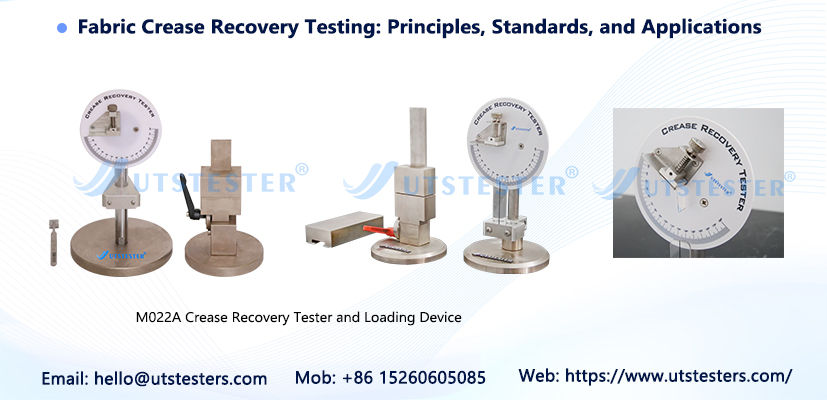
Тестер восстановления складок
Устройство для приложения давления: прецизионный груз для создания давления (500 г ± 5 г)
Система синхронизации: точное управление временем подачи и восстановления давления.
Измерение углов: специальный транспортир или цифровая измерительная система.
Контроль условий окружающей среды: Стандартные атмосферные условия (20 ± 2 °C, 65 ± 2 % относительной влажности)
4.2 Стандартная процедура испытаний
Шаг 1: Подготовка образца
Из образца вырезают тестовые образцы заданных размеров; берут несколько образцов как в направлении основы, так и в направлении утка (обычно по 5 в каждом направлении); выдерживают их в стандартных атмосферных условиях не менее 24 часов.
Шаг 2: Складывание и прессование
Сложите образец пополам лицевой стороной внутрь (или в соответствии с требованиями стандарта); поместите его в прессовальное устройство и приложите давление 500 г; поддерживайте это давление в течение 5 минут ± 5 секунд.
Шаг 3: Бесплатное восстановление
Быстро сбросьте давление и перенесите образцы в устройство для восстановления; дайте образцам свободно восстановиться в течение 5 минут ± 5 секунд.
Шаг 4: Измерение угла
Измерьте угол между двумя поверхностями с помощью специального транспортира; запишите значение угла восстановления (с точностью до 1 градуса).
Шаг 5: Расчет результатов
Рассчитайте средний угол восстановления для направлений основы и утка отдельно; при необходимости рассчитайте общий угол восстановления (основа + уток).
V. Ключевые факторы, влияющие на восстановление формы после сгибов
5.1 Факторы волокна
Полиэстер (полиэфирное волокно): обладает превосходной способностью к восстановлению формы, высоким модулем упругости и молекулярными цепочками, легко возвращающимися к исходной форме.
Шерсть: Хорошая восстанавливаемость, превосходные эластичные свойства.
Нейлон: умеренное восстановление формы, характеристики значительно снижаются после впитывания влаги.
Хлопок: плохая упругость, высокая жесткость молекул целлюлозы, склонность к образованию водородных связей, которые фиксируют складки.
Вискоза: плохо восстанавливает форму, имеет низкий модуль упругости во влажном состоянии, чрезвычайно склонна к образованию складок.
5.2 Факторы структуры ткани
Плотность ткани: Более плотные ткани, как правило, демонстрируют лучшую восстанавливаемость.
Скручивание пряжи: Высокоскрученная пряжа способствует улучшению восстановления.
Тип переплетения ткани: простое < саржевое < атласное (ускорение увеличивается в этом порядке)
Толщина ткани: более тонкие ткани более склонны к образованию стойких складок.
VI. Применение и интерпретация результатов испытаний
6.1 Классификация углов восстановления (для справки)
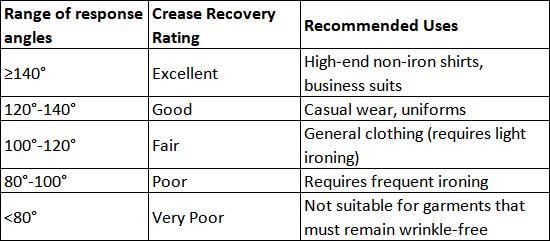
6.2 Анализ анизотропии
Углы восстановления направления основы и утка ткани часто различаются:
1. Высокий угол восстановления основы: указывает на хорошую устойчивость к образованию складок в продольном направлении.
2. Высокий угол восстановления уточной нити: указывает на хорошую устойчивость к образованию складок в поперечном направлении.
3. Существенная разница между двумя образцами: это указывает на возможное неравномерное плетение или отделку ткани.
6.3 Практические рекомендации по применению
Рекомендации для производителей одежды:
1. Ткани для деловых рубашек: Рекомендуемый общий угол восстановления (основа + уток) ≥ 250°
2. Ткани для повседневных брюк: Рекомендуемый общий угол восстановления ≥ 220°
3. Текстильные изделия для дома: Требования к углу восстановления могут быть соответствующим образом смягчены.
VII. Часто задаваемые вопросы и решения
В1: Почему результаты испытаний одной и той же ткани различаются при многократном тестировании?
Возможные причины:
1. Недостаточная акклиматизация образца для испытаний.
2. Различия в месте отбора проб (эффективность различается между краем ткани и ее центром).
3. Несогласованные процедуры тестирования (скорость применения и скорость высвобождения)
Решение: Строго придерживаться стандартных условий, увеличить количество образцов для испытаний и рассчитать среднее значение.
Вопрос 2: Как следует преобразовывать данные, полученные с помощью методов ISO, в данные, полученные с помощью методов AATCC?
Примечание: Эти два метода основаны на разных принципах, поэтому точной формулы пересчета не существует. Рекомендации:
1. Для экспорта в Европу и США: приоритет отдается испытаниям по стандарту AATCC 66.
2. Для общего бизнеса: используйте ISO 2313 или GB/T 3819.
3. Для внутреннего контроля качества: используйте единый метод последовательно и создайте корпоративную базу данных.
Вопрос 3: Как можно улучшить восстановление формы ткани после сминания?
Технические подходы:
1. Выбирайте волокна с присущей им эластичностью (например, смеси полиэстера и спандекса).
2. Оптимизация структуры ткани (соответственное увеличение плотности).
3. Нанесите финишное покрытие из смолы или жидкого аммиака.
4. Разработка новых типов эластичных композитных нитей.
Электронная почта:
hello@utstesters.com
Прямой номер: +86 152 6060 5085
Тел.: +86-596-7686689
Веб:
www.uttesters.com


 +86 152 6060 5085
 English
 русский
 español
 português
 العربية
 Polski



 hello@utstesters.com
 hello@utstesters.com
 +86 152 6060 5085
 +8615260605085