Срок службы обуви во многом зависит от износостойкости её подошвы. Будь то повседневная обувь для ежедневных поездок на работу, профессиональные кроссовки для интенсивных тренировок или обувь для активного отдыха на сложном рельефе, потребители ожидают, что подошвы будут «выдерживать износ». Для производителей обуви точное прогнозирование срока службы подошвы и оптимизация качества продукции имеют решающее значение для повышения конкурентоспособности на рынке. Именно здесь и проявляется важность...
тестер износа резины
становится незаменимым «прогнозатором продолжительности жизни». Так как же именно он использует научные исследования для точного прогнозирования продолжительности жизни?
I. Принцип
Основной причиной окончания срока службы подошвы является накопительный износ и ухудшение эксплуатационных характеристик резиновых материалов под воздействием длительного трения и нагрузок. Основная функция подошвы заключается в...
тестер истирания резины
Цель состоит в том, чтобы ускорить процесс износа материалов подошвы в лабораторных условиях путем моделирования реальных условий трения. На основе количественной оценки полученных данных об износе рассчитывается износостойкость материала и срок его службы в реальных условиях эксплуатации.
II. Прибор для испытания на истирание резины
Износ — это потеря объема или массы резинового материала, стертого при определенных условиях испытаний. К распространенным методам испытаний относятся:
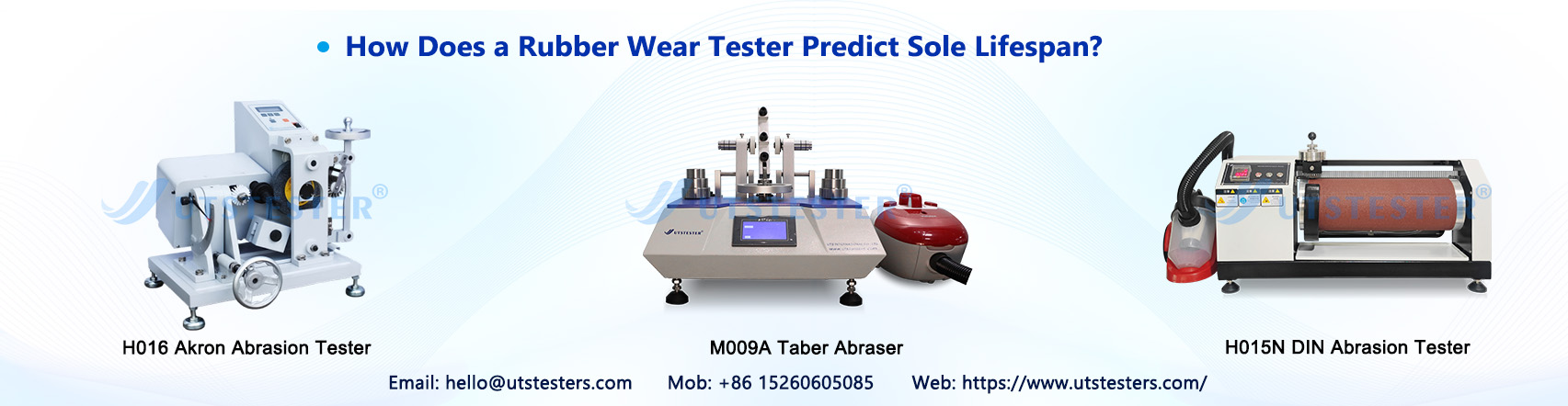
Испытание на абразивный износ по стандарту DIN: измеряет потерю объема образца при обработке абразивным кругом.
Тест Акрона: измеряет потерю массы резины на вращающемся абразивном круге.
Абразивный тестер Табера: обеспечивает всестороннюю оценку пределов износостойкости материала.
Как правило, меньшее значение потери массы или объема в условиях испытания указывает на большую «износостойкость».
1. Акронский тестер абразивного износа: динамическое трение
Испытательный стенд Akron Abrasion Tester — одно из наиболее часто используемых устройств для тестирования подошв, особенно подходящее для имитации динамических сценариев трения во время ходьбы, например, тех, которые возникают при ходьбе спортивной и повседневной обуви. Его основная конструкция заключается в прижимании стандартного резинового испытательного колеса к вращающейся абразивной поверхности под углом 15° с нагрузкой 26,7 Н. Испытуемый образец совершает как орбитальное, так и вращательное движение, идеально воспроизводя состояние качения и небольшого скольжения при контакте подошвы с землей.
В ходе испытаний машина точно контролирует расстояние трения (обычно 1,61 км). После испытания величина износа рассчитывается путем измерения разницы масс образца до и после истирания. Научно-исследовательские центры спортивных брендов, таких как Adidas, часто используют это оборудование для оптимизации состава материалов промежуточной подошвы. Например, это помогло утроить износостойкость материала промежуточной подошвы Boost, что позволило подошвам сохранять целостность рисунка протектора даже после имитации 2000 км ходьбы.
2. Износостойкий тестер DIN: Испытание на трение композитных материалов
Испытательный стенд DIN для определения абразивного износа (также известный как роликовый испытатель абразивного износа) предназначен для моделирования условий трения композитных материалов, при которых подошва скользит и катится по шероховатым поверхностям, таким как гравийные дороги или бетон. Он прижимает прямоугольные образцы резины к вращающейся роликовой поверхности, покрытой наждачной бумагой. Образец совершает возвратно-поступательное движение вдоль оси ролика с постоянной скоростью. Износостойкость определяется путем измерения потери массы или изменения объема образца.
Данное оборудование соответствует стандартам DIN 53516 и GB/T 9867. Параметры испытаний, такие как зернистость наждачной бумаги P60, нагрузка на образец 10 Н и скорость вращения ролика 40 об/мин, строго стандартизированы. Оно подходит для сравнительного испытания на истирание материалов подошвы, таких как резина конвейерных лент и амортизирующая резина, что позволяет быстро проводить отбор высокоизносостойких материалов, подходящих для сложных дорожных условий.
3. Испытательный стенд Taber для определения абразивного износа: универсальная испытательная платформа.
В отличие от описанных выше специализированных устройств, тестер абразивного износа Taber является универсальным прибором для испытания на износ. Заменяя абразивные круги и регулируя нагрузку, он имитирует сценарии износа на различных поверхностях. Основной принцип его работы заключается в создании износа за счет трения о вращающиеся абразивные круги. Измеряя скорость абразивного износа при различном давлении и скорости, он позволяет всесторонне оценить пределы износостойкости материала.
Это устройство подходит для тестирования различных твердых и эластичных материалов, особенно хорошо оно подходит для тестирования обуви (например, походных ботинок), предназначенной для различных сценариев использования. Оно предоставляет производителям исчерпывающие данные о характеристиках материала, помогая оптимизировать распределение материала по различным зонам подошвы (таким как зоны повышенного износа, например, пятки и передняя часть стопы).
III. Процесс тестирования и ключевые показатели
Точность прогнозирования срока службы подошвы с помощью прибора для испытания на истирание резины зависит от стандартизированных процедур тестирования и научной метрической системы. Полный процесс тестирования обычно включает пять основных этапов, каждый из которых напрямую влияет на точность результата.
1. Стандартизированная подготовка образцов
Во-первых, образцы должны быть вырезаны из подошвы в соответствии со спецификациями, обеспечивая равномерную толщину, безупречную поверхность и размеры, соответствующие требованиям к испытательному оборудованию (например, диаметр образца примерно 68 мм для абразивного тестера Akron). Качество подготовки образцов напрямую влияет на воспроизводимость результатов испытаний и должно строго соответствовать таким стандартам, как GB/T 1689 и ASTM D1630.
2. Предварительная обработка образцов
Подготовленные образцы следует поместить в среду со стандартной температурой и влажностью (обычно 23±2°C, 50±5% относительной влажности) на 24 часа для достижения равновесия. Этот этап устраняет внутренние напряжения, возникающие в процессе обработки образцов, обеспечивая стабильность материала во время испытаний и предотвращая влияние факторов окружающей среды на результаты испытаний на износ.
3. Настройка параметров
Настройте соответствующие параметры испытаний в зависимости от целевого сценария применения подошвы, включая нагрузку, скорость вращения, среду трения и цикл испытаний.
4. Запуск тестирования и запись данных.
При запуске оборудования образец подвергается относительному трению с абразивной средой (например, шлифовальным кругом, наждачной бумагой). Устройство автоматически регистрирует циклы трения и пройденное расстояние. В течение всего испытания необходимо постоянно контролировать работу оборудования для поддержания стабильности параметров до достижения заданного цикла или до тех пор, пока образец не продемонстрирует явное разрушение (например, глубина износа превысит критический порог).
5. Расчет результатов и оценка срока службы
После завершения испытаний основная задача заключается в расчете ключевых показателей и установлении их корреляции с фактическим сроком службы. К наиболее важным показателям относятся:
5.1 Объем износа: Разница в массе или изменении объема образца до и после износа, обычно измеряемая в миллиграммах на тысячу циклов (мг/1000 циклов). Меньший объем износа указывает на более высокую износостойкость материала и более длительный срок службы подошвы.
5.2 Коэффициент трения: Отражает характеристики трения между материалом и контактной поверхностью. Чрезмерно высокий или низкий коэффициент трения влияет на скорость износа, а также связан с сопротивлением скольжению подошвы;
5.3 Характер царапин: Наблюдая под микроскопом трещины, отслоения и другие повреждения на поверхности образца, можно определить характер разрушения материала, что позволит оптимизировать его состав.
Интегрируя эти показатели и калибруя их с помощью обширных данных о реальном использовании, можно создать математическую модель, связывающую «объем истирания со сроком службы».
IV. Распространенные заблуждения: Твердость ≠ Износостойкость
Наконец, необходимо исправить распространенное заблуждение: многие считают, что «чем тверже подошва, тем лучше износостойкость». В действительности эластичные материалы, такие как резина, могут рассеивать трение за счет деформации, что делает их более износостойкими, чем твердые пластмассы. Например, резиновые подошвы спортивной обуви демонстрируют в 2-3 раза более высокую износостойкость, чем промежуточные подошвы из ЭВА, именно потому, что упругая деформация резины снижает локальную концентрацию напряжений и замедляет истирание.
Именно здесь проявляется ценность прибора для проверки износостойкости резины — он устраняет субъективные предубеждения, предоставляя объективные данные и позволяя как производителям, так и потребителям оценивать исключительно эксплуатационные характеристики на основе научных данных, а не просто тактильных ощущений или визуального вида.
Заключение
Основная причина, по которой приборы для испытания на истирание резины служат «прогнозаторами срока службы» подошв обуви, заключается в их научных методах тестирования, обеспечивающих точное соответствие между «лабораторными ускоренными испытаниями» и «реальными условиями эксплуатации». От динамического моделирования трения в приборе Akron Abrasion Tester до испытаний на комбинированное трение в приборе DIN Abrasion Tester и многоусловной адаптивности прибора Taber Abrasion Tester, эти устройства в совокупности создают количественную систему оценки износостойкости подошв, что способствует высококачественной разработке в обувной промышленности.
Для производителей обуви выбор подходящего оборудования для испытаний на истирание резины и разработка научно обоснованных моделей прогнозирования срока службы имеют ключевое значение для повышения конкурентоспособности продукции. Для потребителей понимание основной логики испытаний на истирание резины позволяет более четко оценивать ценность продукта.
Электронная почта:
hello@utstesters.com
Прямой номер: +86 152 6060 5085
Тел.: +86-596-7686689
Веб:
www.uttesters.com


 +86 152 6060 5085
 English
 русский
 español
 português
 العربية
 Polski


 hello@utstesters.com
 hello@utstesters.com
 +86 152 6060 5085
 +8615260605085